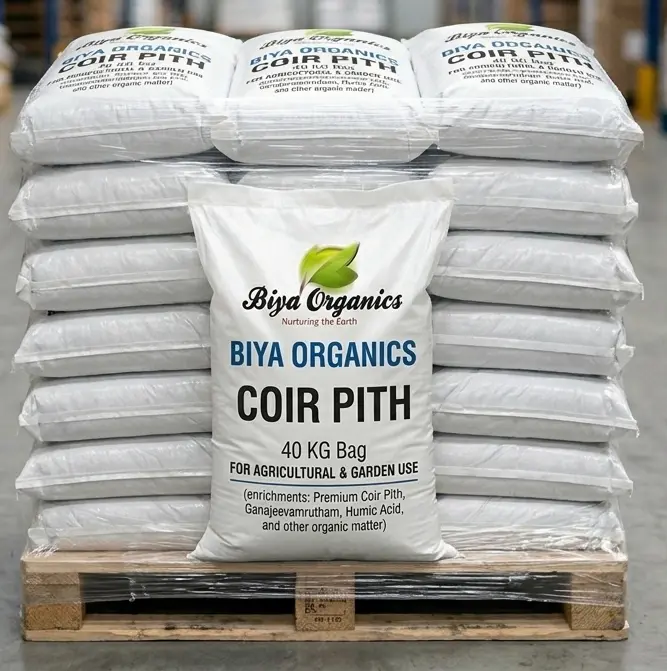
Coir Pith 40 KG Bag
Coir Pith
Coir pith is the fine dust-like and spongy fraction left after coconut fiber extraction. Raw coir pith can be slow to decompose, but washed, treated, or composted coir pith is very useful in growing media.
Product Overview
• Product Name: Coir Pith
• Category: Soil Conditioners and Growing Media
• Product Type: Fine coconut husk pith used in compost and growing media
• Form / Texture: Brown fibrous pith, loose or composted
• Suitable For: Potting mixes, nursery media, composting, and soil moisture improvement
• Application: Growing media ingredient or composted organic amendment
Why Coir Pith Is Useful
• Holds water while remaining lighter than soil.
• Recycles coconut industry by-products.
• Useful in potting mixes and composted organic manures.
• Can improve moisture comfort in hot climates.
Main Components
• Coconut pith and short fibers.
• Lignin-rich organic matter.
• Variable potassium and soluble salts depending on processing.
• Microbial biomass if composted.
Benefits
• Improves moisture retention.
• Lightens potting mixes.
• Supports root spread when balanced with aeration materials.
• Can become good organic manure after proper composting.
Growing and Application Requirements
• Use washed or composted coir pith for sensitive plants.
• Avoid raw salty material in seedlings.
• Add nitrogen or composting culture if composting raw coir pith.
• Blend with nutrients and drainage materials.
Usage Instructions
• Hydrate and fluff before mixing.
• Blend into potting media with compost and perlite.
• Compost raw coir pith with nitrogen source where needed.
• Use as a moisture-retentive component, not a full fertilizer.
Common Uses
• Potting mix • Coir compost • Nursery trays • Soil conditioning • Mulch blending
Advantages
• Renewable and lightweight.
• Good water retention.
• Widely available in coconut-growing regions.
Disadvantages or Limitations
• Raw material may be high in salts or phenolic compounds.
• Low nutrient value unless composted or enriched.
• Can stay too wet in poorly drained pots.
Maintenance and Storage Tips
• Prefer composted coir pith for soil amendment use.
• Use perlite for plants needing extra air.
• Check smell; mature composted coir should not smell sour.
Safety and Precautions
• Wear a mask while handling dry dusty pith.
• Avoid using unknown industrial coir waste directly on edible plants.
• Store dry and ventilated.
Best Plants or Situations
• Seedlings • Potted vegetables • Indoor foliage • Flowering plants • Coir compost production
Useful Facts
• Coir pith can be composted into a more stable organic manure.
• It is often confused with coir fiber, but the pith is the fine absorbent part.
Summary
Coir pith is a valuable growing-media ingredient when processed well. Its strength is moisture management, and its weakness is low nutrition unless it is composted or enriched.
References Consulted
• Tamil Nadu Agricultural University - Coir pith compost: https://agritech.tnau.ac.in/ta/org_farm/orgfarm_coircompost.html
• University of Maryland Extension - Growing media for containers: https://extension.umd.edu/resource/growing-media-potting-soil-containers/
• Central Coir Research Institute - C-POM coir pith organic manure: https://www.ccriindia.org/pdf/Cpom.pdf