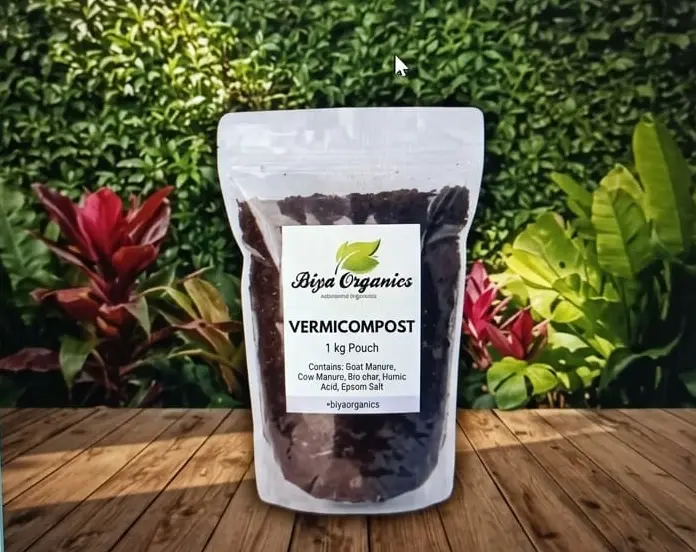
Vermicompost - 1 kg Pouch
Vermicompost
Vermicompost is organic matter transformed by composting worms and beneficial microbes into a rich, crumbly amendment. Good vermicompost improves soil texture, supports microbial life, and supplies nutrients slowly without the harshness of fresh manure.
Product Overview
• Product Name: Vermicompost
• Category: Organic Fertilizers and Compost
• Product Type: Earthworm-processed organic manure and soil conditioner
• Form / Texture: Soft, dark, crumbly material with an earthy smell
• Suitable For: Vegetables, flowers, herbs, fruit plants, nursery plants, and potting mixes
• Application: Soil mixing, top dressing, seedling mix ingredient, and compost enrichment
Why Vermicompost Is Useful
• Adds organic matter and plant-available nutrients in a gentle form.
• Improves water holding in sandy media and structure in tired soils.
• Supports microbial activity around the root zone.
• Suitable for both containers and garden beds when used in moderation.
Main Components
• Worm castings.
• Partly decomposed plant residues.
• Beneficial bacteria and fungi.
• Natural humus-like organic matter.
Benefits
• Improves seedling establishment and root growth.
• Helps potting mixes stay moist but not heavy when blended correctly.
• Provides slow nutrient release.
• Enhances soil life and long-term fertility.
Growing and Application Requirements
• Use mature, earthy-smelling vermicompost only.
• Avoid soggy, sour, or foul-smelling material.
• Do not make container media entirely from vermicompost; blend it with cocopeat, soil, compost, and aeration material.
• Keep the amendment moist but not waterlogged.
Usage Instructions
• Mix 10-20 percent into potting media for general container plants.
• Apply a thin top dressing around established plants and water gently.
• Blend into seed-starting mixes only in small amounts.
• Refresh containers every few months with a small top-up.
Common Uses
• Vegetable beds • Flower pots • Seedling trays • Herb gardens • Terrace gardens
Advantages
• Low odor when mature.
• Gentler than fresh manure.
• Improves both nutrient supply and soil structure.
Disadvantages or Limitations
• Nutrient content varies with feedstock.
• Excessive use can make media dense or overly rich.
• Poorly processed material may contain pests or undecomposed waste.
Maintenance and Storage Tips
• Store under shade and keep slightly moist.
• Break clumps before mixing into potting media.
• Use along with drainage materials for potted succulents or indoor plants.
Safety and Precautions
• Wear gloves when handling any manure-based compost.
• Wash hands after use, especially before food handling.
• Avoid applying immature compost directly around edible leaves.
Best Plants or Situations
• Leafy greens • Tomato • Chilli • Rose • Jasmine • Mint • Coriander
Useful Facts
• Vermicompost is sometimes called worm castings, but commercial products may include both castings and decomposed bedding.
• Composting worms are different from deep-burrowing garden earthworms.
Summary
Vermicompost is one of the most dependable organic amendments for home gardening. It is not magic by itself, but when mature and used in the right proportion, it steadily improves soil fertility, root comfort, and plant health.
References Consulted
• Utah State University Extension - Vermicomposting: https://extension.usu.edu/yardandgarden/research/vermicomposting
• University of Minnesota Extension - Composting in home gardens: https://extension.umn.edu/managing-soil-and-nutrients/composting-home-gardens
• University of Minnesota Extension - Soil biology: https://extension.umn.edu/soil-management-and-health/soil-biology